


Almost every phone case on the market is made of one of two plastics, or both. Understanding polycarbonate vs TPU is the single most useful thing you can know when reading a product page, because it tells you how the case will behave in a drop and how it will look in a year: the two things nobody can show you in a photograph.
The short answer: polycarbonate is rigid, scratch-resistant and holds its colour, but transmits shock. TPU absorbs impact and grips well, but is floppy alone and yellows with UV exposure. Each one's weakness is the other's strength, which is why good cases use both.
| Polycarbonate | TPU | |
|---|---|---|
| Behaviour | Rigid, holds shape | Flexible, returns to shape |
| In a drop | Spreads force across the shell | Absorbs energy at the point of impact |
| Weakness | Transmits shock, can crack | No structure on its own |
| Yellowing | Resists UV for years | Discolours, often within a year |
| Grip | Slippery | Grippy |
| Best used as | Outer shell | Inner liner |
What is polycarbonate?
Polycarbonate is an engineering thermoplastic with an unusually high strength-to-weight ratio. It's the same material family used for eyewear lenses, aircraft canopies and, at industrial grades, bulletproof glazing and riot shields.
What it does well. It holds a rigid shape indefinitely, resists scratching, and stays optically clear. It makes the thinnest cases on the market, often under a millimetre, and it keeps that shape for years rather than stretching or sagging.
Its UV behaviour is the underrated advantage. Polycarbonate's molecular structure resists the ultraviolet chain-breaking that causes yellowing, so a PC back panel typically holds its appearance far longer than a TPU one.
What it does badly. It doesn't absorb shock. It disperses force across the whole shell rather than cushioning it, which prevents damage concentrating in one spot but transmits energy to the phone. Under a hard enough impact the shell itself cracks, sacrificing the case to save the device, which is better than the alternative but still a failure. It's also slippery in the hand, which increases the odds of the drop happening at all.
What is TPU?
Thermoplastic polyurethane combines rubber-like elasticity with the manufacturability of a thermoplastic. It bends without breaking, absorbs impact energy through controlled deformation, and returns to shape afterwards.
What it does well. Shock absorption, straightforwardly. It's the best of the common materials at soaking up the energy of a fall, particularly at corners, which is where most phone damage actually occurs. It grips well, resists oils, and is easy to fit and remove.
What it does badly. It yellows. Clear TPU discolours through photo-oxidation: UV light breaks the polymer chains and the fragments react with oxygen to form colour-absorbing compounds inside the plastic. It happens from within, so cleaning does nothing, and how fast depends almost entirely on sun exposure and whether the manufacturer paid for UV stabilisers. Good ones add stabilisers that meaningfully delay it. Cheap ones buy you a few extra months. That's why two cases both claiming to be anti-yellowing can perform completely differently over a year.
On its own, TPU is also structurally floppy. A case that flexes freely doesn't hold its shape around the phone.
Why do tough cases use both?
Read those two lists together and the conclusion is obvious: each material's weakness is the other's strength. Polycarbonate is rigid and transmits shock; TPU absorbs shock and lacks rigidity.
A hybrid, which is what "tough case" means, uses a rigid PC outer shell to spread impact force across the whole case, and a TPU inner liner to absorb what the shell distributes. Hard outside, forgiving inside. This is why hybrid constructions meet drop-testing standards that either material struggles to meet alone.
The corner drop is the test that matters. A phone landing on a corner concentrates the entire energy of the fall into an area about the size of a fingernail. A rigid shell alone transmits that spike into the frame. A soft shell alone deforms and lets the corner reach the ground anyway. Two layers convert the spike into a spread.
How do I read a phone case product page?
Three things worth checking, in order of usefulness.
Does it name the materials at all? If a listing says only "durable plastic" or "premium material," that absence is itself information. Manufacturers who invested in good material specify it.
Which material is where? "PC back with TPU frame" is a meaningfully different product from "TPU case." On clear cases especially, a PC back panel is the difference between a year of clarity and a few months.
Are stabilisers mentioned? On any clear or light-coloured case, UV stabilisers are a real cost the manufacturer chose to absorb. Brands that paid for them say so.
What we use
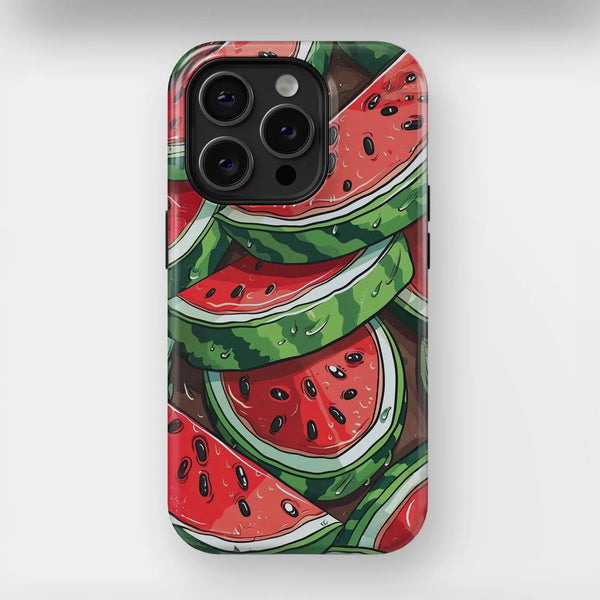
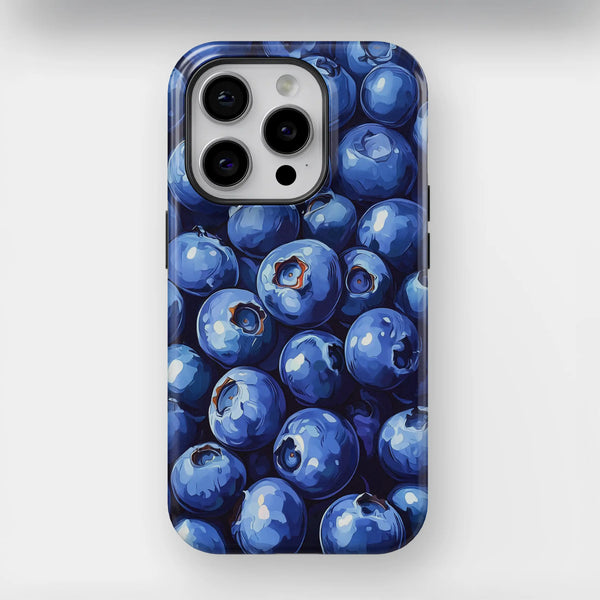
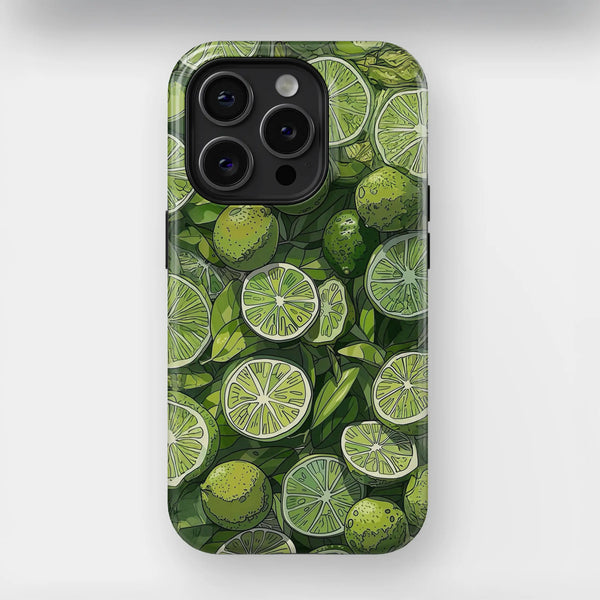
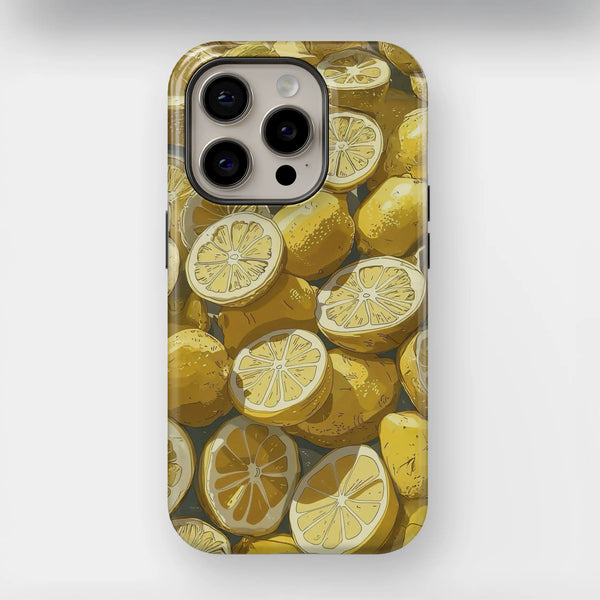
Every Casey case is dual-layer: rigid polycarbonate outer shell, shock-absorbing TPU inner liner, with the magnet array moulded into the shell so it works with MagSafe chargers and accessories, and a sealed high-gloss finish over the artwork. Precision-cut for iPhone 11 through iPhone 17 Pro Max, including iPhone Air and the 16e.
The honest limitation
The cost of dual-layer construction is thickness, a millimetre or two over a slim single-material shell. If you want the absolute thinnest possible phone in the tightest pocket, a bare polycarbonate case will be slimmer and you'll be trading corner protection for it. That's a legitimate choice; it just shouldn't be made accidentally.
Thickness also costs you a little at the top wireless charging tier. Charger makers advise cases under roughly 2mm to reach a full 25W, and a dual-layer case is thicker than that. At 15W you won't notice.
And we don't make clear cases at all, which sidesteps the yellowing question rather than solving it. A printed surface has nothing transparent to lose, so our TPU never has to hold clarity. That isn't a materials advantage, it's a different product. More on the mechanism in why phone cases turn yellow, and the broader comparison in tough vs clear vs silicone.
FAQ
Is polycarbonate or TPU better for a phone case?
Neither alone. Polycarbonate is rigid and scratch-resistant but transmits shock; TPU absorbs impact but lacks structure and yellows. A hybrid using both outperforms either.
Which yellows faster, PC or TPU?
TPU, considerably. Clear TPU discolours through photo-oxidation, while polycarbonate's molecular structure resists UV degradation for far longer.
Does polycarbonate crack?
Under severe impact it can. The shell fails rather than transmitting the full force to the phone: undesirable, but preferable to a broken device.
Why do tough cases use two materials?
Because corner impacts need both behaviours at once: a rigid shell to spread the force and a flexible liner to absorb it.
Is TPU or polycarbonate better for grip?
TPU, clearly. Polycarbonate is slippery, which is part of why single-material PC cases can increase the chance of a drop happening at all.